Basic Terminology
Before evaluating any marketing proposal, it helps to know the vocabulary. Most of the confusion (and most of the bad spending decisions) in legal marketing comes from terminology being used loosely or incorrectly.
SERP: Search Engine Results Page. The page Google returns after a query. In 2026, a SERP rarely shows just ten blue links; it now typically includes AI Overviews, local map packs, "People Also Ask" boxes, featured snippets, ads, and organic listings.
Meta tags: The HTML elements that tell search engines what a page is about. The two that matter most are the title tag (what appears as the clickable headline in search results) and the meta description (the short summary beneath it). Well-written meta tags directly affect click-through rate.

Click-Through Rate (CTR): The percentage of people who saw your listing in search results and actually clicked on it. A 5% CTR means 5 of every 100 searchers clicked through.
Cost Per Click (CPC): The amount you pay each time someone clicks one of your paid ads. In competitive legal categories, CPCs of $100 to $400+ per click are routine in major markets.
Cost Per Lead (CPL): The amount spent to generate one qualified inquiry. More useful than CPC because not every click becomes a lead.
Return On Investment / Return On Ad Spend (ROI / ROAS): The dollars earned per dollar spent. The number that should drive every channel decision.
Impressions: How many times your listing or ad was shown. A vanity metric on its own; useful only in combination with clicks and conversions.
Bounce rate: The percentage of visitors who land on a page and leave without interacting further. High bounce rates on key practice area pages usually signal a content or design problem.
Conversion: Any defined action you want a visitor to take: filling out a contact form, calling the office, starting a chat, downloading a resource.
Backlinks: Links from other websites pointing to yours. Historically a core ranking signal; still important, but quality and relevance now matter far more than volume.
Domain authority: A third-party score (popularized by Moz and Semrush) estimating a domain's ranking strength. Not a Google metric, but a useful proxy for comparing competitors.
Schema / structured data: Code added to a page that tells search engines exactly what kind of content it contains (an attorney bio, a legal article, a review, etc.). Critical for AI citations and rich results.
Local Services Ads (LSAs): Google's pay-per-lead format for service businesses, including law firms, that displays at the very top of local results with a "Google Screened" badge.
Experience, Expertise, Authoritativeness, Trustworthiness (“EEAT”): Google's content quality framework, applied most strictly to legal and other YMYL sites.
Your Money or Your Life (YMYL): Google's category for content that can affect a reader's finances, safety, health, or legal standing. Law firm content lives here.
Answer Engine Optimization and Generative Engine Optimization (AEO/GEO): The disciplines of getting your firm cited inside AI-generated answers.
Marketing Channels
A modern law firm marketing program is built from several distinct channels. Each one behaves differently, costs differently, and serves a different role in the funnel. Each of these is most functional when combined with other marketing types; the mistake most firms make is over-indexing on one or two channels instead of building a balanced portfolio where the channels reinforce one another.
We’ll go over the most commonly used marketing channels for law firms below.
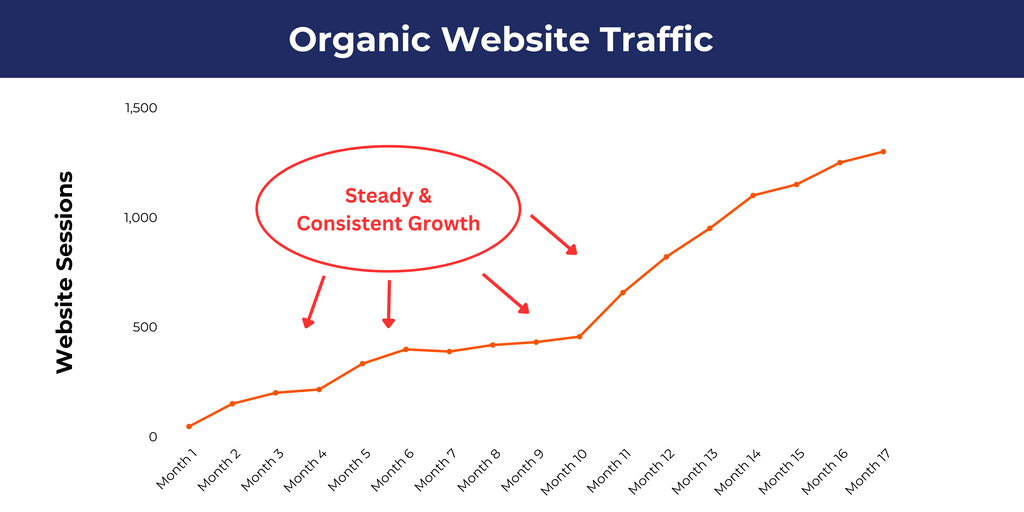
Organic search: Traffic from unpaid search engine results. Driven by SEO, content quality, technical site health, backlinks, and entity authority. Slow to build, but compounds over time and produces the lowest long-term cost per case.
Paid search (PPC): Traffic from paid ads on Google and Bing search results, including Google Ads and Local Services Ads. Immediate, but expensive in legal categories, and revenue stops the moment you pause spending.

AI search: Visibility inside ChatGPT, Google AI Overviews, Perplexity, Gemini, and similar generative tools. Earned through content depth, citations, structured data, and authority signals. The fastest-growing discovery channel in 2026.
Local search and Maps: Visibility in Google's local map pack and Apple Maps. Driven by your Google Business Profile, NAP (name, address, phone) consistency, reviews, and local relevance signals.
Content marketing: The blog posts, practice area pages, guides, FAQs, and resources that fuel every other channel. Content is the asset; SEO, AI search, social, and email are the distribution.
Email marketing: Direct messages to past clients, referral sources, and opted-in prospects. Underused in legal but excellent for referral cultivation, newsletter authority-building, and nurture sequences for slow-decision matters like estate planning.
Social media marketing: Organic presence and paid promotion on LinkedIn, Facebook, Instagram, YouTube, and TikTok. Best used for brand visibility, attorney thought leadership, and warming up prospects before they're ready to hire.
Paid social: Ads on the platforms above. Lower CPCs than search ads, but lower intent — useful for mass torts and class actions, less efficient for transactional legal services.
Display and retargeting: Banner ads served across the web, often used to re-engage visitors who left your site without converting.
Referral and reputation channels: Reviews on Google, Avvo, Martindale, Yelp; bar association directories; lawyer referral services; and partnerships with non-competing firms. Often the highest-converting channel of all, and frequently undermanaged.
PR and earned media: Press coverage, guest articles, podcast appearances, and authoritative third-party mentions. Important for E-E-A-T signals and for the citation graph that AI tools rely on.
Trial Guides Digital Marketing does not specialize in billboard ads, influencer value or direct-mail marketing, but we can absolutely advise on these approaches in conjunction with other marketing methods. If you want help mapping which channels make sense for your practice area and market, talk to a member of our team for a free audit of your marketing apparatus.
How SEO Works
SEO is often described in abstractions, but there is actually a plotted algorithm that runs every time you perform a Google search. Search engines work in three stages: crawling, indexing, and ranking.
- Crawling: Google sends automated programs (crawlers, or bots) across the web following links from page to page. If your site is technically broken, slow, or blocks crawlers, large portions of it never get seen.
- Indexing: When the crawler reads a page, Google decides whether to add it to its index, the massive database it draws from when answering a query. Thin, duplicate, or low-quality pages may be crawled but not indexed, meaning they can never rank.
- Ranking: When a user runs a query, Google pulls candidate pages from the index and orders them using hundreds of signals. The signals that matter most for legal sites cluster into four categories.
From there, Google looks for relevance signals, namely: Does the page actually answer what the user is searching for? This is judged by how well the content matches the query's intent, the words and concepts on the page, the page's title and headings, and how the page is structured.
Over time, Google builds an understanding of your authority, trustworthiness and experience. Backlinks from reputable sites, brand mentions across the web, and citations in legal directories and authoritative publications can all help build credibility, as can naming yourself in your blogs and landing pages. (We talk at length about entity SEO in a later section.) Google measures your site’s value through behavioral data: how long people stay, where they go after they find you, and overall site health.
For legal sites specifically, two extra factors raise the bar: YMYL status (Google applies its strictest quality standards) and E-E-A-T (every page is evaluated for first-hand experience, expertise, authoritativeness, and trustworthiness). We cover these at length in later sections, as well.
Get a Free Website Analysis from Trial Guides Digital Marketing
How Pay-Per-Click (PPC) Works
Pay-per-click advertising looks simple from the outside: you bid on a keyword, your ad shows up, someone clicks, you pay. The mechanics are considerably more involved, and understanding them is the difference between a profitable campaign and a five-figure monthly waste.
Every time someone runs a search, Google runs an instantaneous auction among advertisers bidding on that keyword. Your ad's placement is determined not just by how much you bid, but by your Ad Rank, which is roughly your bid multiplied by your Quality Score, a 1-to-10 rating of your ad and landing page in terms of expected value.
Your Quality Score is determined by a number of factors, starting with the headline and description text of your ad. This also include extensions like sitelinks, callouts, call buttons, and location info. Better ad copy means higher CTR, which means higher Quality Score, which means lower CPC. A higher Quality Score means you pay less per click for the same position.
You don't just bid on a keyword, by the way; you bid on a keyword with a match type that controls how loosely Google can interpret it. Broad match casts the widest net (and burns the most budget on irrelevant searches); phrase and exact match are tighter and usually more efficient for legal advertisers. Negative keywords, terms you explicitly do not want to show up for, are often the single highest-leverage lever in a legal PPC account.
You can bid manually, where you set the max CPC), or use one of Google's automated strategies (“Maximize Conversions,” “Target CPA,” “Target ROAS” etc.). We recommend against automated bidding unless you've fed Google enough accurate conversion data.
Once the bones of your campaign are set, we turn to conversion tracking: the analytic infrastructure that tells you which clicks actually became leads and which leads actually became cases. Keeping close track of these metrics can help you avoid wasting money on underperforming keywords, double down on winners, and calculate true cost per signed case.
A word of caution: PPC is risky as a sole strategy. Every metric above is competitive; as more firms bid on the same keywords, CPCs climb. As AI Overviews answer more queries directly on the SERP, fewer users click ads at all. The same campaign that produced a 4x return two years ago may break even now. We highly recommend working with a dedicated digital marketing expert before pouring too many resources into your PPC campaign in 2026.
Curious whether your PPC spend is actually paying off—or whether your current digital agency is benefiting more than you are? Request an independent review from Trial Guides Digital Marketing.
SEO vs. PPC: A Direct Comparison
Trial Guides Digital Marketing is proud of our work in both SEO and PPC marketing spheres. We see these two marketing tools as complements of each other; they’re achieved through different means, with different goals in mind. Here’s a quick breakdown:
Time for results: PPC produces traffic the day a campaign goes live. SEO typically takes 6 to 18 months to produce meaningful organic traffic, depending on the market, the competition, and the firm's starting authority.
Compounding: Good SEO compounds on itself. Every new piece of authoritative content, every earned backlink, every entity citation makes the next ranking easier to win. PPC does not compound; every click is paid fresh. The success of your last PPC campaign will not dictate of your current campaign.
Cost behavior: PPC costs are linear. In other words: every click costs money, and the moment you pause the campaign, traffic stops. By contrast, SEO costs are front-loaded into content production, technical work, and authority building. Once rankings are established, the traffic continues at minimal incremental cost.
Cost per case over time. In the first year, PPC almost always wins on raw lead volume. By year two or three, a well-executed SEO program typically produces a dramatically lower cost per signed case, at a fraction of the PPC equivalent. (Put another way: PPC will help you win a battle, but SEO will help you win the war.)
Click share. Even with a perfectly executed PPC campaign, organic listings collectively earn the majority of clicks. The click-through rate on paid ad share has been shrinking as AI Overviews intercept queries before users scroll.
Trust and credibility: Most users know a paid ad when they see one. Organic and AI citation placements carry more implicit trust because they're earned, not bought.
Control and speed of iteration: PPC is more controllable in the short term; you can change targeting, copy, and ad spend in minutes. By contrast, SEO changes take weeks or months to register in rankings, and will generally have a slower ROI.
Finally, a word about each method’s vulnerabilities: PPC is vulnerable to CPC inflation, ad fatigue, AI-driven click loss, and platform policy changes. SEO is vulnerable to Google algorithm updates and the rise of AI search, though firms with strong entity authority and deep content tend to weather those shifts well.

Do I need better SEO or more PPC?
The right answer depends on your business goals. SEO lays the long-term foundation, and PPC offers a powerful lever for immediate volume, competitive practice areas, or campaigns where speed matters more than efficiency. The firms that get into trouble are the ones who treat PPC as a substitute for SEO instead of a complement to it (and sometimes vice versa, particularly in instances where you’re up against a statute that requires a fast response).
Want to see what a balanced SEO-plus-PPC strategy could look like for your firm? Talk to our team to set up a free consultation.
SEO and Entity SEO: Laying the Foundation
Traditional SEO considerations—keywords, backlinks, on-page optimization—still matter. But in 2026, the bigger lever is entity SEO: getting Google to understand your firm as a distinct, authoritative entity, not just a website with keywords on it. (For the full breakdown of entity SEO, please refer to Entity SEO for Law Firms: The 2026 Guide.)
Entity SEO is built through consistent citations across authoritative sources, structured data markup, attorney bios that connect to verifiable credentials, and meaningful associations with the practice areas, jurisdictions, and case types your firm actually handles. Done right, it's what gets your firm pulled into AI answers, Google's local pack, and high-intent organic results.
It's also one of the most misunderstood disciplines in legal marketing, with plenty of agencies still selling black-hat shortcuts that will get a firm penalized. Beyond entity work, the fundamentals still apply: technical SEO health, fast page speed, mobile-first design, internal linking, and authoritative backlinks from legal directories, bar associations, and earned press coverage.
Want to know how your SEO compares to competitors in your market? Request a competitive audit.
E-E-A-T and YMYL: Meeting Google's Higher Bar for Legal Content
Because legal content is “YMYL”—Your Money or Your Life, a type of information that holds tremendous sway in a person’s life—Google evaluates it with a much tougher rubric. Where a general blog could get away with a competent writer summarizing publicly available information, a law firm blog cannot. (Our full guide walks through every requirement and how to operationalize it: EEAT YMYL Lawyers: A Comprehensive Lawyer's Guide.)
Specifically, Google wants to see:
- Experience: content written or reviewed by attorneys who have actually handled the case types being discussed
- Expertise: credentials, bar admissions, case results, and specialization clearly displayed and verifiable
- Authoritativeness: recognition from courts, peers, publications, and legal organizations
- Trustworthiness: accurate citations of statutes and case law, transparent authorship, secure site infrastructure, clear contact information, and honest treatment of outcomes
In practical terms, this means every substantive page on your site should be tied to an attorney byline with a real bio, citations should link to primary sources, and disclaimers and policies should be visible and current. Ghostwritten content with a stock-photo "John Doe, Esq." byline is a liability, not an asset.
Not sure if your content meets Google's standard for legal sites? Get a content review from our team.
AI Search, AEO, and GEO: The New Visibility Layer
This is the single biggest change in legal marketing for 2026. Three related disciplines now sit alongside SEO:
Answer Engine Optimization (AEO) is about structuring content so it can be lifted into the direct-answer boxes that increasingly appear at the top of search results: Google's AI Overviews, featured snippets, and the answer modules inside AI assistants. AEO requires clear question-and-answer formatting, concise definitions, schema markup, and authoritative citations.
Generative Engine Optimization (GEO) goes further; it's the practice of making your firm visible inside generative AI answers. These are the recommendations ChatGPT, Perplexity, Gemini, and Claude give when a prospect asks something like "best personal injury attorney in Portland." More and more, attorneys are hearing new clients say "I found you on AI.” This channel will only grow faster.
AI ranking is the broader umbrella: how AI platforms evaluate, weight, and surface law firm websites. The signals overlap with traditional SEO but also include factors like content depth, citation diversity, structured data, and the firm's presence across authoritative third-party sources.
If your firm has invested nothing in AEO/GEO so far, you are already behind competitors who have. Find out if your firm is showing up in AI search results by scheduling an AI visibility audit.
Content Marketing and Legal Blogging
Content is the engine that drives every other channel: SEO rankings, AI citations, social proof, email nurture, and conversion. But the bar for what "good" content looks like in 2026 is much higher than it was even two years ago. Effective legal content in 2026 means:
- Topical depth, not breadth. A firm is better served by twenty deeply researched, attorney-reviewed pieces on its core practice areas than by two hundred shallow blog posts covering every legal topic imaginable.
- Real authorship. As part of the YMYL standard for legal content, every article should carry the byline of an attorney at the firm who wrote/reviewed it for accuracy. Bios should link to credentials, bar admissions, and case experience.
- Genuine answers to real client questions. A regularly updated FAQ page can be as good as gold, both for your readers and for your rankings. The questions prospects actually ask (timelines, costs, what to expect, what to bring to a consultation) frequently outperform generic pages.
- Content that is updated regularly. Statutes change, case law evolves, and stale content hurts rankings. Refresh cycles, particularly for rapidly evolving topics, should be part of the editorial calendar.
Content marketing is the foundation that protects your firm from the AI shifts described above. As AI content makes legal websites feel homogenous, it’s actually easier to stand out by simply editing your content to make sure it truly captures your voice. Firms with deep, well-attributed content libraries are the ones being cited in AI answers. Firms relying on PPC alone are not.
Want a content strategy plan built around your firm's strongest practice areas? Call Trial Guides Digital Marketing for a complimentary 30-minute content consultation.
Paid Advertising: PPC, LSAs, and the Risk of Over-Reliance
Paid advertising still has a place in a balanced marketing mix. Google Ads, Local Services Ads (LSAs), social media ads, and display retargeting can produce immediate traffic, and are sometimes necessary in highly competitive practice areas like personal injury and mass torts. Trial Guides Digital Marketing is happy to assist with your PPC campaigns.
However, two trends should reshape how your firm thinks about this marketing apparatus:
- Costs continue to climb. Cost-per-click in competitive legal categories now routinely runs into the hundreds of dollars per click in major markets. A single client acquisition through PPC can easily cost thousands.
- AI is eroding the click economy. As we've written about in detail: as AI Overviews answer more questions directly on the results page, fewer users click through to ads at all. Firms whose marketing agencies have pushed them into PPC-heavy strategies are increasingly exposed to a channel whose returns are declining. (PPC generates large agency commissions, so many digital marketing firms are loath to admit this.)
The right approach is to use paid as one channel among several, and to pair it with the organic, content-driven, AI-optimized investments that compound over time. If you’re curious whether your PPC spend is actually paying off, we’re happy to offer an independent review of your ad performance.
Website Design and Conversion Optimization
You’ve got great content, entity presence, topical depth and a laser-focused PPC campaign. Now your website impressions are rising, but the phone still isn’t ringing. What’s the issue?
The issue is: traffic only matters if it converts. A polished website that loads quickly, communicates trust, and guides visitors toward contacting the firm is the single highest-leverage asset in your marketing stack. The fundamentals that consistently move the needle:
- Speed and Core Web Vitals: every second of load time costs conversions
- Mobile-first design: the majority of legal queries now happen on phones
- Clear, prominent calls to action: a visible phone number, a chat option, and a simple contact form on every page
- Trust signals: case results, verdicts and settlements (where ethically permitted), attorney bios with credentials, real client reviews, and recognizable awards or certifications
- Easy navigation: visitors should reach the information they need in two clicks or fewer
We've broken down the most consistent conversion levers in 3 Proven Ways to Optimize Your Law Firm Website for More Clients. If you want to know more about what's holding your website back from converting more visitors, request a website audit and someone from Trial Guides Digital Marketing will be in touch.
Competitive Analysis: Knowing Where You Actually Stand
Most attorneys can name their top three local competitors. Almost none can tell you how those competitors compare on organic traffic, ranking keywords, backlink authority, content volume, or AI citation rate. This blind spot is expensive. Without a real picture of the competitive landscape, marketing decisions get made on gut feel, and budget gets spent on the wrong channels. (For a deep dive on this topic, check out our blog: Competitor Analysis for Law Firms: How Your Website Measures Up.)
A meaningful competitor analysis looks at:
- Organic traffic and ranking keyword overlap
- Backlink profiles and referring domain authority
- Content depth across shared practice areas
- Local pack and map rankings
- Review counts, ratings, and recency across Google, Avvo, and other platforms
- AI citation presence across major generative platforms
- Paid spend estimates and ad creative
As you continue to build your website presence, be sure to periodically check in with your competitors and see how you measure up. This can be a humbling moment—but a critical one in pursuit of dominating local searches. Request a free competitive analysis and we will set you on the best path forward.
Measuring What Matters: The Metrics That Drive Decisions
Marketing without measurement is gambling. But not every metric is equally useful, and a lot of dashboards are full of vanity numbers that don't tie to revenue. The metrics that actually drive better decisions cluster around four types of engagement: clicks, calls, likes, and shares.
- “Clicks” means organic and paid traffic to the site. Within this metric there are also ways to determine how a reader navigates through your website, when they decide to call and how to better capture these leads.
- “Calls” are, specifically, tracked phone conversions from each channel or your marketing apparatus. Depending on the type of law firm you run, calls may correlate more or less with your case volume. (Choosier firms, medical malpractice firms, or firms with a niche practice area may not want to maximize this metric quite as much.)
- “Likes” refers to social engagement, which signal brand visibility and recognition: a good indicator of your entity SEO, as mentioned above. While likes don’t always result in leads, this can be a good indicator of your overall commercial health.
- “Shares” are instances of content distribution that compounds your reach; this generally refers to a shared article on a social media site, but the same principle applies to backlinks to your content. Each share tells you something different about how prospects are interacting with your firm, and each can be improved with targeted effort.
Beyond engagement metrics, every firm should be tracking cost-per-qualified-lead by channel, conversion rate from lead to signed case, and lifetime case value. They should then be tying every marketing dollar back to that pipeline.
It's also worth staying aware of platform-level changes that affect how you read your own data. For instance, in September 2025, many legal sites saw a sudden ~50% drop in Google Search Console impressions even though rankings and clicks held steady: a reporting change, not a traffic collapse. Knowing the difference matters: Sudden Drop in Google Search Console Impressions (Starting 9/12/25): What We Know.
If you want a reporting setup that actually ties marketing spend to signed cases, that’s exactly what we do. Set up a consultation with our team to talk about analytics.
We have a prediction for 2026 and beyond: the firms dominating local searches, and getting great cases, will not be the ones spending thousands on advertising, or DIYing their own web design. Top law firms will be the ones treating digital marketing as a foundational component of their business. They will take their marketing seriously, hold themselves accountable, and continually adapt as the rules continue to change.
If this sounds like your law firm—or the law firm you aspire to have—let’s talk. Trial Guides Digital Marketing is here to help you build a marketing strategy that sets you up for success; click here to get started.